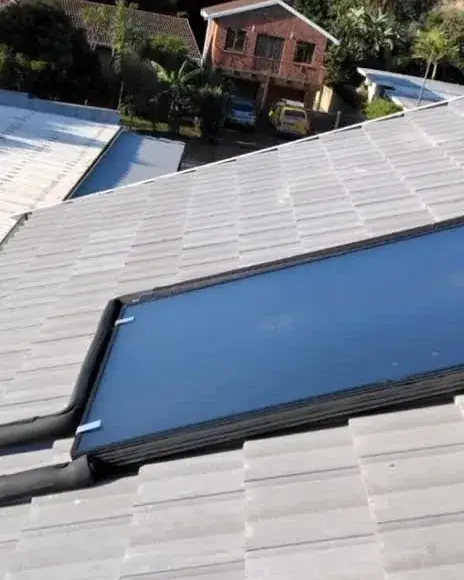
Compare
How each system heats water
| System | How it works | Electricity use |
|---|---|---|
| Electric geyser | A 3–4 kW element heats the tank | Highest |
| Solar geyser | Roof collectors heat the water; the element tops up | Low in summer, higher in winter |
| Heat pump | Pulls heat from the air, like an aircon in reverse | Roughly a third of an element |
Solar geysers
Solar collectors on the roof do most of the heating on sunny days, so running costs drop sharply in summer. In Cape Town's wet winters the backup element works harder, so pairing solar with a timer or remote geyser switch keeps costs down. You need a suitable, north-facing roof area.
Heat pumps
A heat pump uses a small amount of electricity to move heat from the air into the water, using far less power than an element for the same hot water. It performs consistently all year, needs no roof space, and can often be fitted to your existing geyser.
Electric geysers
The cheapest to buy and install, and the most expensive to run. Adding a smart geyser switch so it only heats when you need hot water is the easiest saving.
Which is right for you?
- Big household, good roof: solar geyser with a smart switch
- Limited roof space or shady site: heat pump
- Tight budget now: keep the electric geyser and add a remote switch
Our PIRB-registered plumbers install all three and issue a plumbing COC. Geyser, solar and heat pump installation →